
1. Programme Overview
-
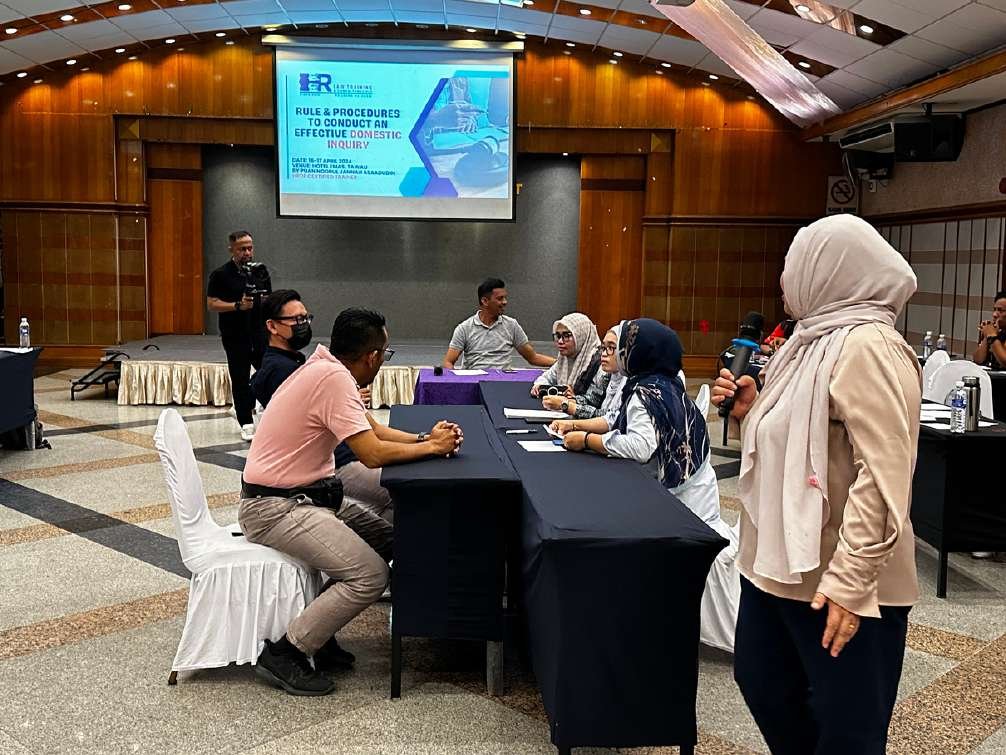
This two-day professional programme is designed to equip participants with the legal knowledge, practical skills and procedural discipline required to manage employee misconduct cases and conduct fair, well-documented and defensible domestic inquiries in West Malaysia, Sabah, Sarawak, & Labuan. The programme is structured around the relevant legal framework depending on the training jurisdiction: the Employment Act 1955, for West Malaysia & Labuan; the Labour Ordinance of Sabah (Cap. 67), for Sabah; and the Labour Ordinance of Sarawak (Cap. 76), for Sarawak, together with the Industrial Relations Act 1967, Industrial Court principles and the rules of natural justice.
Training focus: A domestic inquiry is not merely an administrative formality. It is a structured internal process intended to ensure that an employee facing misconduct allegations receives a fair opportunity to know the case against them, respond to the allegations, challenge the evidence and present their own case before an impartial panel.
2. Legal Framework and Compliance Context
-
The core misconduct provisions for this programme are section 14 of the Employment Act 1955 for West Malaysia & Labuan, section 13 of the Labour Ordinance of Sabah for Sabah, and section 14 of the Labour Ordinance of Sarawak for Sarawak. These provisions allow an employer, on grounds of misconduct inconsistent with the fulfilment of the express or implied conditions of service, to act after due inquiry by dismissing the employee without notice, downgrading the employee or imposing another lesser punishment. The same provisions allow suspension for the purpose of inquiry for a period not exceeding two weeks, with payment of not less than half wages, and require restoration of withheld wages if misconduct is not disclosed.1
Relevant amendment sections to note are Part XVA of the Employment Act 1955 for West Malaysia, especially sections 81B, 81C and 81H on sexual harassment complaint inquiry, findings and notice, and section 69F on discrimination in employment. For Sarawak, the relevant provisions inserted by Act A1754 include Chapter IIIA sections 9A to 9H, especially sections 9B and 9C on inquiry and findings, section 9H on notice, and section 19A on discrimination in employment.
Who Should Attend
- HR professionals, HR Managers, Payroll Officers, Accounts Executives, Admin Staff, and Business Owners
Methodology
- Practical, Hands-on Workshop, Case Studies
Modules
Modules
-
9am - 9:10 (Registration)
1. Malaysian Employment Law and its Impact on Payroll
- Introduction to Employment Act 1955, Sabah & Sarawak Labour Ordinance
- Key Provisions: wages, working hours, leave entitlements (annual, sick, maternity, etc.), termination benefits, and other employee rights.
- Handling payroll for shift work and irregular hours
- Contract of Service
- Minimum Wage
- Overtime and Public Holiday Pay
2. Payroll Calculations and Deductions
- Gross Salary Calculation
- Statutory Deductions:
- EPF
- SOCSO
- EIS
- Income Tax
- Other Deductions
- Net Salary Calculation
12pm-1pm (Lunch)
3. Payroll Procedures and Best Practices
- Payroll Cycle
- Payroll Records
- Payslip Generation
- Payment Methods
- Payroll Reporting
- Auditing and Compliance
Tea Break: 03:00pm-03:20pm
4. Practical Session
End (5pm)

Venue Information
Date & Venue (Online)
3-4 August 2026 | Online
Training Fee
RM1,799 Per pax
Date & Venue (F2F)
20-21 August 2026 | UCSI Hotel Kuching
Training Fee
RM2,299 Per pax
Time:
09am-05pm
Discount
20% Off For Group of 4 & above