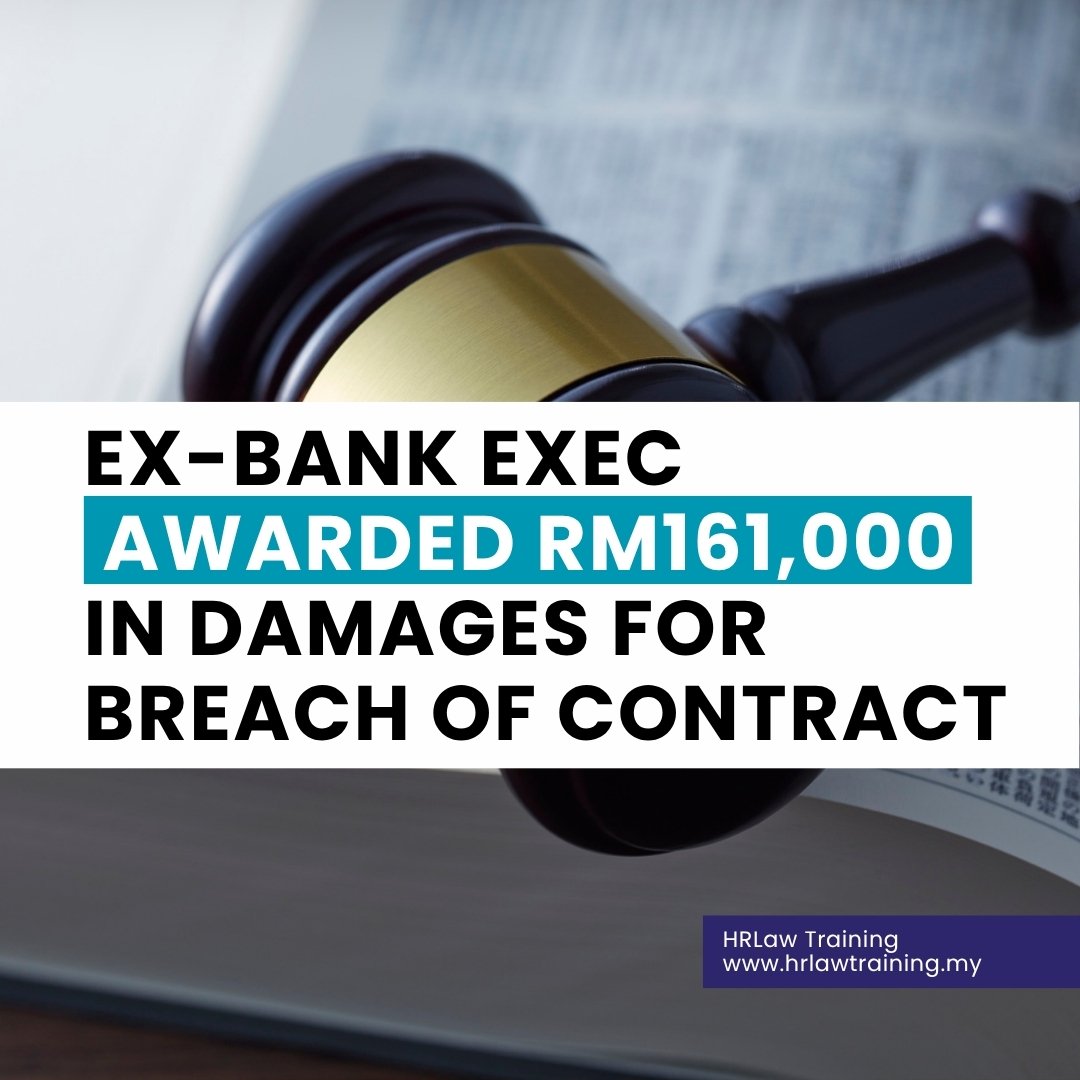
High Court Awards Ex-Bank Executive RM161,000 for Breach of Contract
Kuala Lumpur, Malaysia – In a significant ruling, the High Court has ordered Bank Simpanan Nasional (BSN) to pay a former executive, Sofian Amirudin, RM161,000 in damages for an unlawful transfer that constituted a breach of his employment contract. The decision, handed down by Justice Anand Ponnudurai, also saw BSN’s counterclaim dismissed and costs awarded to the plaintiff.
Case Background
Sofian Amirudin, 54, who served as the Head of Cards Business and CRM at BSN, was subjected to a transfer notice on August 25, 2021. This notice directed him to report to a newly formed Special Project Unit (SPU) effective September 1, 2021. Amirudin refused to comply, asserting that the transfer amounted to a demotion, and subsequently declared himself constructively dismissed.
Amirudin had been employed by BSN since late November 2009, operating under a series of seven successive fixed-term contracts over a 12-year period. His final contract, a two-year agreement commencing January 1, 2020, stipulated a monthly basic salary and allowances totaling RM40,300.
Court’s Findings and Rationale
Justice Ponnudurai determined that BSN’s directive to transfer Amirudin to the SPU violated Clauses 10.1 and 10.2 of his employment contract. The court found that the transfer was implemented without a clear definition of job scope or duties, effectively stripping Amirudin of his substantive role and placing him in a materially different and subordinate position. Evidence presented indicated that following the transfer, Amirudin was no longer recognized as a department head and was removed from the bank’s organizational chart.
Despite ruling in favor of Amirudin regarding the unlawful transfer, the High Court declined to declare him a permanent employee. The judge clarified that all seven of Amirudin’s employment agreements with BSN were fixed-term contracts, thus precluding a claim for permanent employment status.
The court also affirmed its jurisdiction to hear the breach of contract claim, noting that Section 52 of the Industrial Relations Act 1967 precludes dismissal cases against statutory bodies like BSN from being adjudicated in the Industrial Court.
Damages and Counterclaim
Amirudin was awarded damages amounting to approximately RM161,000, representing four months of his basic salary and fixed allowances. This figure corresponds to the unexpired balance of his seventh contract with BSN. Additionally, the court ordered BSN to pay RM30,000 in legal costs to Amirudin.
BSN’s counterclaim for RM108,600, which represented three months’ wages in lieu of a termination notice based on Amirudin’s refusal to attend work, was dismissed. The bank’s argument that Amirudin’s actions constituted a willful breach of contract was not accepted by the court.
Claims made by Amirudin for back wages until retirement age, as well as for reputational and general damages, were dismissed by the court, which deemed them not maintainable within the civil court’s purview.
Legal Representation
Sofian Amirudin was represented by counsel Srividhya Ganapathy and Eisyarmily Akhtar. Bank Simpanan Nasional was represented by S Ravichandaran and P Tharuny.
Key Takeaways from Sofian Amirudin v Bank Simpanan Nasional (BSN) Case
This High Court ruling offers crucial insights for both employees and employers regarding employment contracts, transfers, and legal recourse.
For Employees:
- Unlawful Transfers: Employees can challenge transfers that fundamentally alter their role, lack clear job descriptions, or effectively demote them, especially if such actions breach their employment contract. Such actions may be deemed unlawful and a breach of contract.
- Fixed-Term Contracts: Be aware that successive fixed-term contracts, even over many years, do not automatically confer permanent employee status unless explicitly stated or implied by law. The court will examine the nature of the agreements.
- Constructive Dismissal: If an employer’s actions make continued employment untenable (e.g., an unlawful demotion), an employee may declare constructive dismissal and seek damages for breach of contract.
- Legal Recourse: The civil courts are a viable avenue for breach of contract claims, particularly against statutory bodies where industrial court jurisdiction might be limited by specific acts (e.g., Industrial Relations Act 1967).
For Employers:
- Clarity in Contracts and Transfers: Any employee transfer must be clearly defined, justified, and adhere strictly to the terms and conditions outlined in the employment contract. Transfers that lack defined scope or result in effective demotion can lead to legal challenges.
- Breach of Contract Risks: Unilateral actions that breach employment contract clauses, even those related to internal transfers, can result in significant financial penalties, including damages for the unexpired term of a contract and legal costs.
- Understanding Employment Status: Employers must clearly distinguish between fixed-term and permanent employment. Relying on successive fixed-term contracts does not necessarily shield an employer from liability if contractual terms are breached.
- Jurisdictional Awareness: Be aware of the appropriate legal forums for employment disputes, especially when dealing with statutory bodies, as specific legislation may dictate where cases can be heard.
- Risk of Counterclaims: Counterclaims against employees for refusing unlawful directives may be dismissed if the employer is found to be in breach of contract first.